

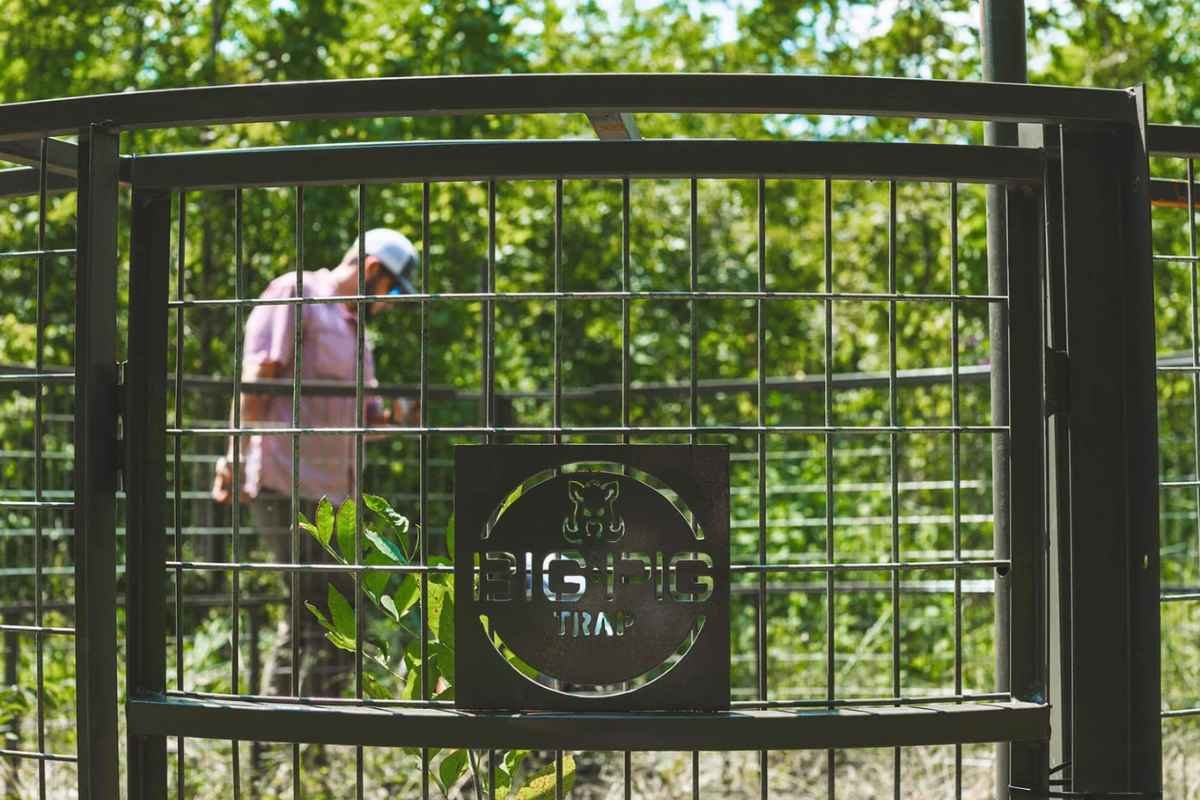
Catching the whole sounder is the win. What you do at the trap site in the hours and days after the drop is what keeps that win from quietly creating new problems — fly pressure, a site hogs learn to avoid, or a trap that sits idle when it should be working the next location. This is an operations guide, not veterinary advice; for animal-health and disease questions, work from USDA APHIS, the CDC DPDx New World screwworm reference, and your state officials.
Below is the trap-site routine we walk through with landowners and hog-control operators running Big Pig systems.
After the Drop: Securing the Whole Sounder
The advantage of a true whole-sounder capture is that you are not leaving educated, trap-shy survivors behind to teach the rest of the group. Once the gate or drop has triggered, confirm the full group is contained before anyone approaches, and handle removal according to your operation's plan and local regulations. The goal is a clean, complete capture — not a partial one that trains the remaining hogs.
Carcass and Site Handling (Awareness, Not Treatment)
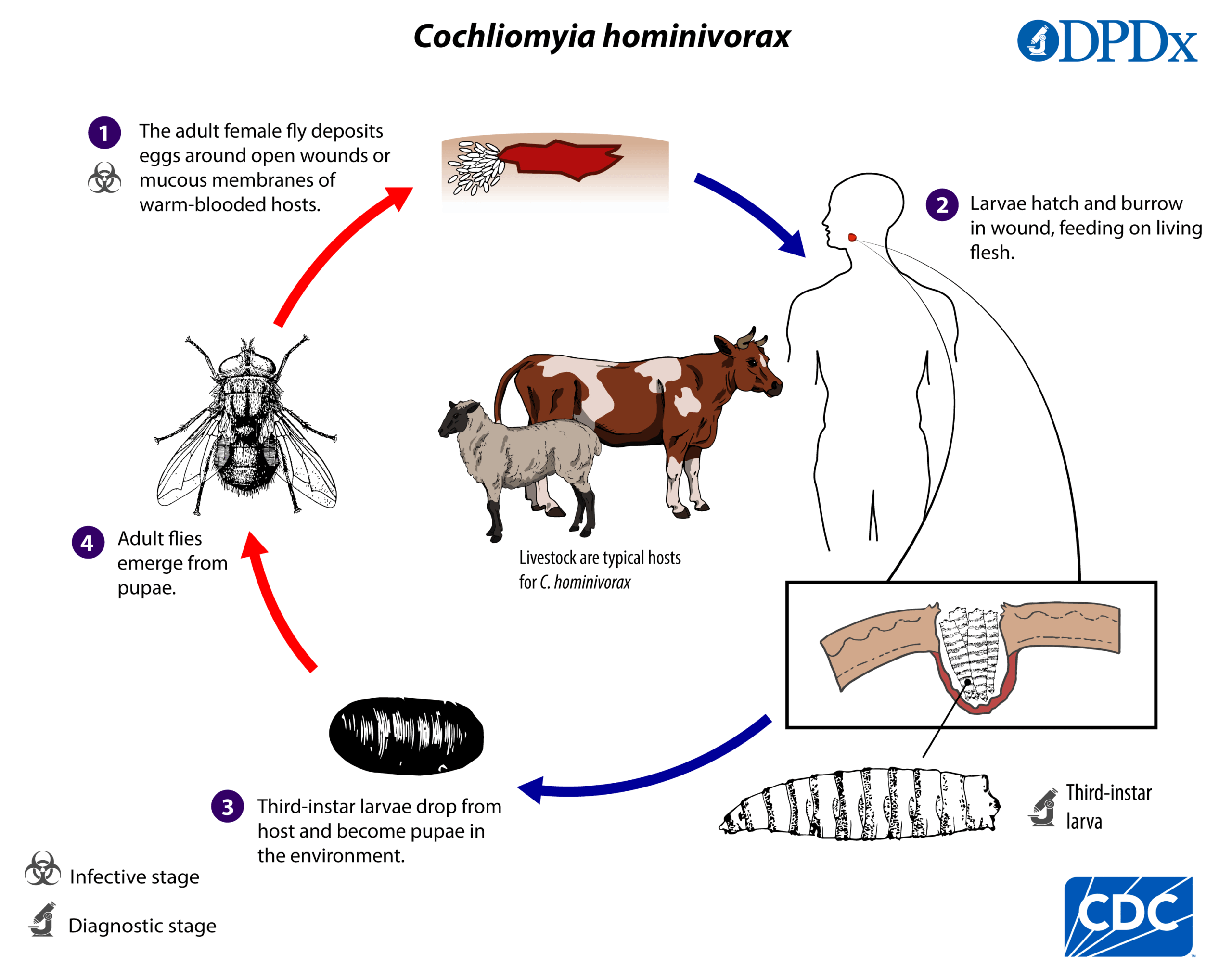
Feral hogs attract flies, and a trap site after a capture is exactly the kind of disturbed, high-activity spot where fly pressure concentrates. Handle carcasses and dispose of them promptly per your state's guidance, and keep the working area clean. This matters because New World screwworm infests the living tissue of warm-blooded animals — not feces — so any live wounds on stock or wildlife in the area are what deserve attention. Reporting and treatment decisions belong with your veterinarian and USDA APHIS. For the parasite life cycle and host context, see the CDC New World screwworm life-cycle graphic.
Reducing Fly Pressure at the Trap Site
Lowering fly pressure at and around the site is straightforward operations work:
- Remove carcasses and bait residue quickly so the site does not become an attractant.
- Reset the area before the next pre-bait cycle so the location stays productive.
- Keep notes on which sites draw the most activity — those are your priority trap locations.
The biggest lever is still volume: the more of the local population you remove, the less hog-driven fly pressure your landscape carries.
Resetting and Relocating the Trap
A heavy-duty steel system is built to keep working. After a capture, decide whether to re-bait the same site (if camera data shows more hogs using it) or relocate to the next pressure point. Big Pig drop and panel systems are designed for this: no single piece weighs more than 85 lb, which keeps one- or two-person assembly and relocation realistic on a working ranch. For larger operations, the Panel Trap Trailer moves panels upright instead of in a flat stack.
Pairing Trap Sites with HogEye Monitoring
The fastest way to know whether to reset or relocate is to let the site tell you. The HogEye Camera System is the camera and trigger layer — not a trap itself — giving you remote eyes on the site so you are not driving out to check an empty pen. Pair it with a Big Pig Drop Trap and you can watch a sounder build and drop the gate at the right moment with one tap.
For setup walkthroughs and owner resources, see Support & Tips, or reach the Hog Trap Hotline at 888-744-8727. Questions about a specific site or build? Start on the Contact page.
Frequently Asked Questions
Why is whole-sounder capture better for biosecurity?
Removing the entire family group in one capture lowers local hog density faster and avoids leaving trap-shy survivors that spread out and keep attracting flies.
Does the trap site itself attract screwworm?
The site can attract flies generally if carcasses or bait residue are left behind. New World screwworm specifically infests live animals, not droppings, so prompt cleanup and attention to live wounds is the practical concern.
Should I reset or relocate after a capture?
Let camera data decide. If hogs are still using the site, re-bait; if activity has moved, relocate the trap to the next pressure point.
How hard is it to move a Big Pig trap?
No single piece weighs over 85 lb, so one- or two-person relocation is realistic, and the Panel Trap Trailer makes moving panels easier on larger properties.
Is this veterinary guidance?
No. This is trap-site operations. Disease reporting and treatment belong with your veterinarian and USDA APHIS.
Share:
Whole Sounder Drop Trap Methods for Texas Landowners
How High-Volume Hog Removal Lowers Ranch Fly Pressure