

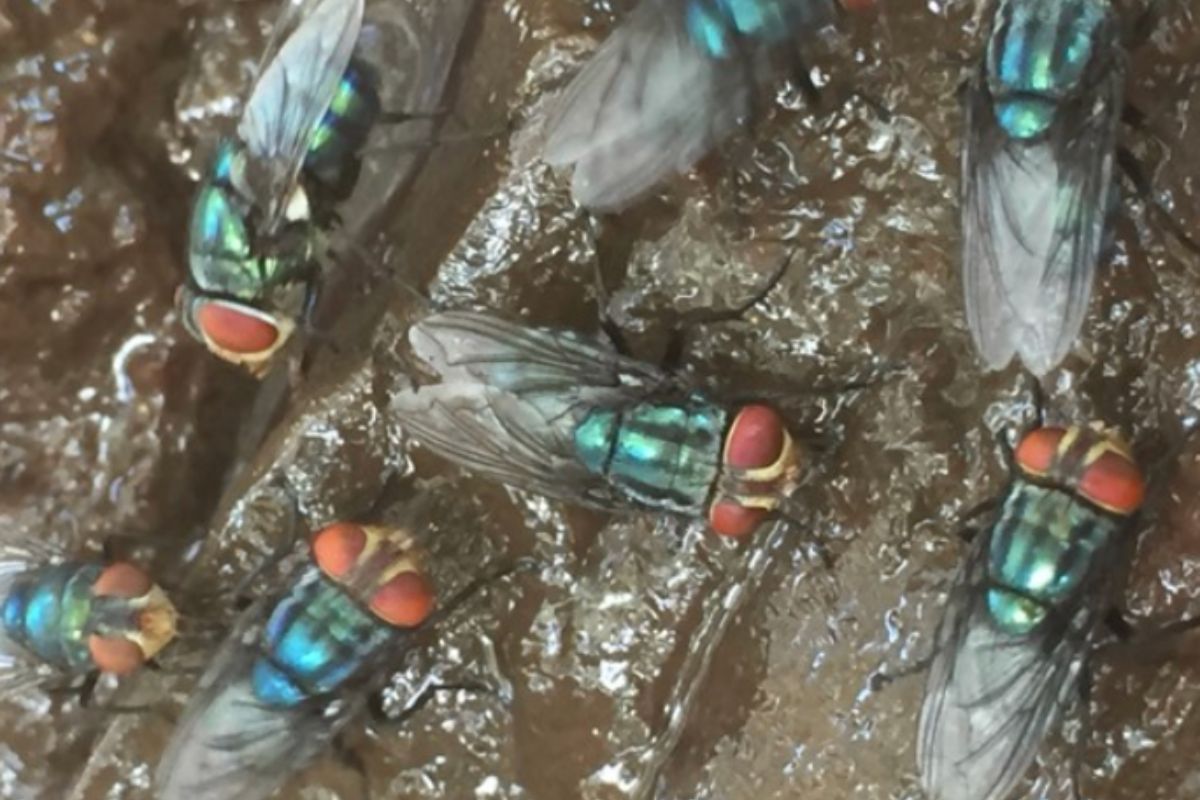
Fly pressure on a working ranch is not an abstract pest problem. It is a landscape condition shaped by hosts, wounds, wallows, and movement. When New World screwworm (NWS) is in the conversation, that condition matters, because the parasite depends on live warm-blooded hosts, not feces. This post is awareness and operations only. For clinical facts, reporting, and the parasite life cycle, work from CDC DPDx, USDA APHIS, and your state animal health officials.
The Big Pig angle is simple: high-volume hog removal is one of the few levers landowners control that actually shrinks the unmonitored host load driving fly pressure.
Fly Pressure Is a Host Problem
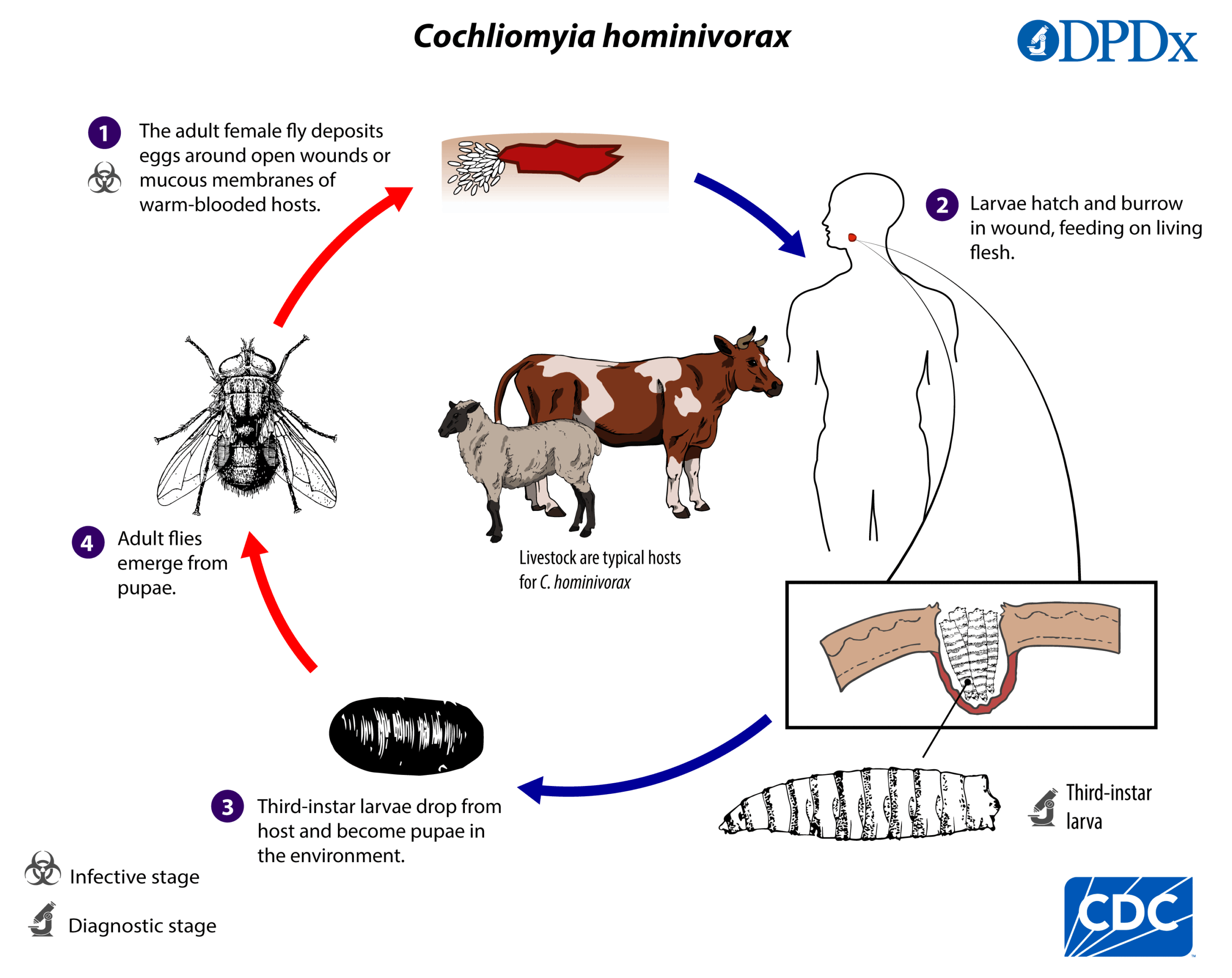
New World Screwworm larvae infest living tissue. Female flies lay eggs at wounds and similar openings; the larvae enlarge those wounds and attract more flies. That is why manure myths waste attention. If something is breeding on feces, it is not NWS. Keep eyes on live animals and live wounds. The CDC life-cycle graphic is a clear reference for how the parasite moves through hosts.
Why Feral Hog Density Keeps Fly Pressure High
Feral hogs raise landscape fly pressure for three operational reasons:
- Movement. Hogs can cover roughly 6 miles per day, so wounds, wallows, and fly activity do not stay on one pasture.
- Attraction. Rooting, wallowing, fighting wounds, and farrowing concentrate flies where sounders settle.
- Monitoring gap. Landowners watch cattle closely. Wildlife gets almost none of that attention, which is why hard-to-monitor hosts matter when NWS risk is elevated across Texas and neighboring states.
Recent state and news coverage has underscored the same point officials repeat: wildlife is harder to check than livestock, and feral hogs are a mobile host group that can move risk across fence lines. Treat news case counts as time-sensitive. Confirm current figures with USDA APHIS and your state veterinarian before repeating them.
Partial Catches Raise Pressure. Volume Lowers It.
Catching a few hogs and educating the rest creates trap-shy survivors. Those animals keep breeding, keep moving, and keep attracting flies. Whole-sounder capture removes the family group in one event, which is the volume change that actually lowers local density. Landowners already need to remove on the order of 70% per year just to break even against hog population growth. Piecemeal shooting and one-at-a-time captures do not keep up.
What High-Volume Removal Changes at Ranch Scale
When you remove sounders instead of stragglers, you cut:
- The number of unmonitored hosts moving through the property
- The wallows and rooting sites that concentrate flies
- The leftover animals that teach the next group to avoid traps
That is not a medical treatment for screwworm. It is a biosecurity habit: fewer mobile hosts, less hog-driven fly pressure, cleaner trap sites after capture. Pair it with the cattle-health practices your veterinarian recommends.
How Big Pig Systems Deliver Trap-Scale Volume
Big Pig builds heavy-duty steel drop and panel traps for whole-sounder work, almost always paired with the HogEye Camera System for remote eyes and one-tap triggering. HogEye is the camera and trigger layer, not a trap type. Drop traps fit smaller or trap-shy sounders; panel traps scale for larger populations. After a capture, reset or relocate based on camera data so the system keeps working the next pressure point.
For trap-site cleanup and reset habits after a drop, see our companion guidance on trap-site biosecurity. To size a system for your ground, start on Get a Quote or call the Hog Trap Hotline at 888-744-8727.
Frequently Asked Questions
Does hog removal treat New World screwworm?
No. It is one biosecurity layer that reduces unmonitored hosts and fly pressure. Clinical questions belong with your veterinarian and USDA APHIS.
Does screwworm breed on hog droppings?
No. NWS infests living tissue of warm-blooded animals. If it is on feces, it is not screwworm.
Why does volume matter more than occasional shooting?
Populations can double about every four months. Removing the whole sounder lowers density faster and avoids training survivors to be trap shy.
Where should I get clinical or reporting information?
Start with CDC DPDx and USDA APHIS, then your state animal health officials.
How does HogEye fit this plan?
Remote monitoring lets you wait for the full sounder before you trigger, which is how high-volume capture actually happens in the field.
Share:
Trap-Site Biosecurity After Whole-Sounder Drop Trap Removal
Big Pig Drop Trap vs Pig Brig: Steel Drop vs Net for Whole Sounders